Home · Guides · Aug 3, 2026 · 9 min
Are AI Headshots Safe? Privacy, Data Security & What to Watch Out For
AI headshot generators have made professional photos accessible to everyone — no photographer, no studio, no $400 session fee. But before you upload 10 selfies to a platform you just found on Google, there's a question worth asking first: what…
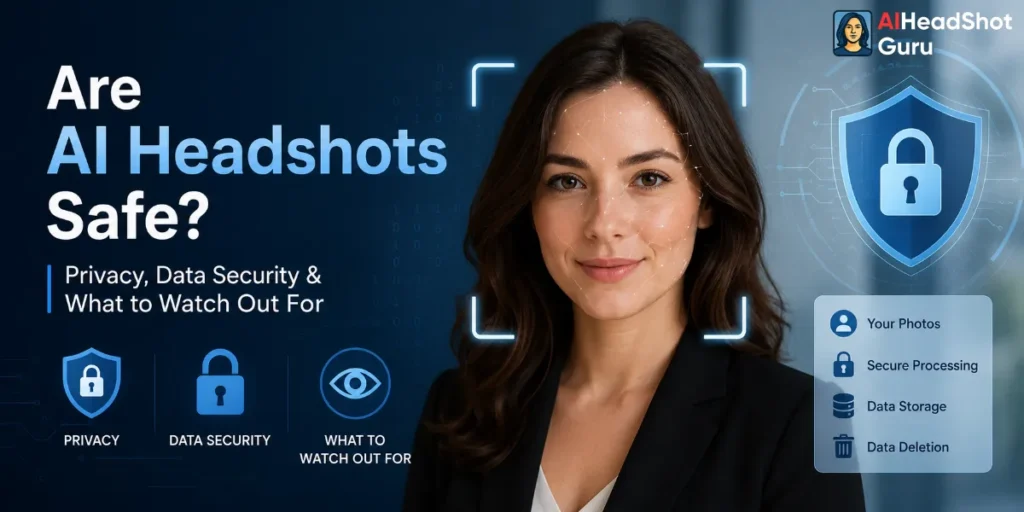
AI headshot generators have made professional photos accessible to everyone — no photographer, no studio, no $400 session fee. But before you upload 10 selfies to a platform you just found on Google, there’s a question worth asking first: what exactly happens to your face once it hits their servers?
The short answer — yes, AI headshots are safe when you pick the right tool. The longer answer involves auto-deletion timelines, GDPR compliance, no-training policies, and a few red flags that separate trustworthy platforms from sketchy ones. Here’s everything you need to know.
AI Headshots Safety at a Glance: What Reputable Tools Do
| Safety Feature | What Good Tools Do | What to Worry About |
|---|---|---|
| Photo storage | Auto-delete after 7–30 days | No stated deletion policy |
| Data encryption | SSL/TLS in transit + at rest | No mention of encryption |
| Model training | Photos NOT used for AI training | Vague or silent on training use |
| GDPR compliance | Explicit compliance, EU-ready | No privacy policy or unclear terms |
| Biometric data | Minimal collection, no facial ID database | Facial recognition or profiling language |
| Business model | Paid plans with clear terms | Free tool with zero stated revenue model |
Your Face Is Biometric Data — And That Matters
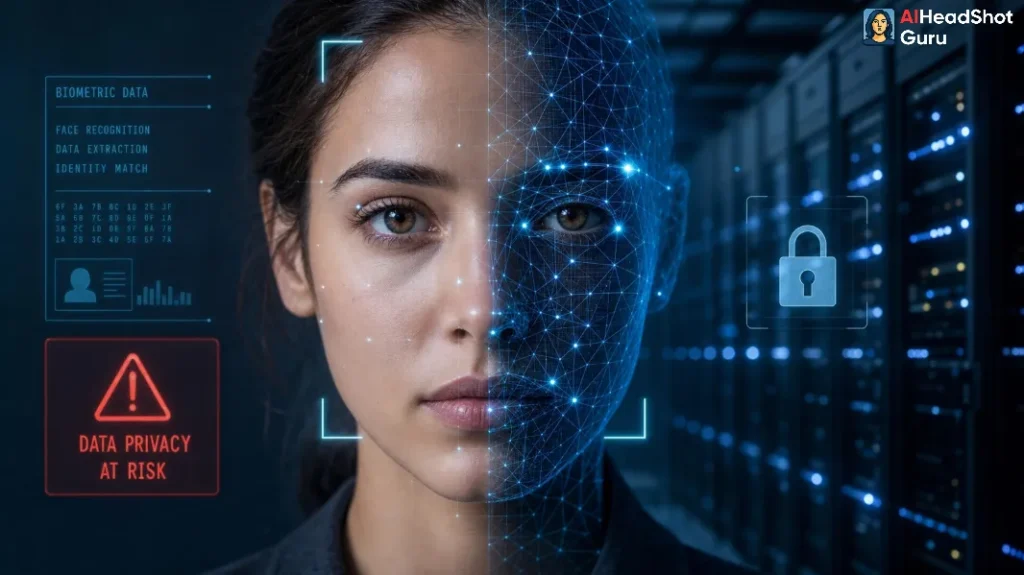
Most people treat uploading selfies like uploading a product photo. They shouldn’t. Under GDPR in the EU and similar laws like CCPA in California, facial data is classified as sensitive biometric data — the same category as fingerprints and health records.
This means the bar for how companies can collect, process, and store your photos is legally higher than ordinary personal data.
Reputable AI headshot platforms are built around this reality: they use your uploaded photos strictly for generating your headshots, then delete everything — uploads, AI training models built from your selfies, and any associated data — within a defined window, typically 7 to 30 days.
The problem isn’t AI headshot technology itself. It’s platforms that don’t respect this distinction.
How Trusted AI Headshot Tools Actually Handle Your Photos
Here’s what the data-handling pipeline looks like on a reputable platform:
- You upload 10–20 selfies — these are used to train a temporary personal AI model specific to your face
- The platform builds your custom model using those inputs and generates your headshots
- Photos and model are stored temporarily for you to download your results
- Everything is deleted automatically — uploads, models, outputs — within the stated retention window (commonly 7–30 days)
- No data is sold, shared, or used to train the platform’s general AI — this should be explicitly stated in the privacy policy
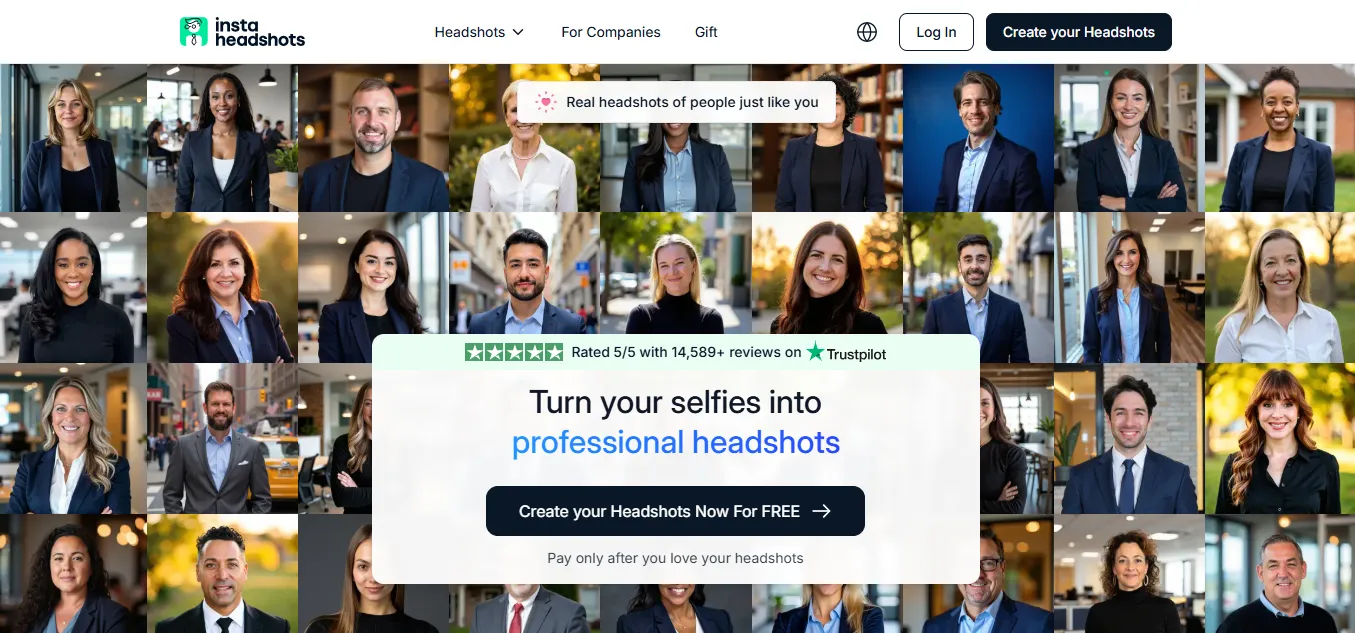
Platforms like InstaHeadshots state upfront that uploaded photos are automatically deleted after 30 days and are never used for training general AI models. That transparency is exactly what you’re looking for.

InstaHeadshots Privacy Coupon: 10% OFF
Choose a privacy-focused AI headshot tool and save 10% with code AFFINCO10.
6 Red Flags That Say “Do Not Upload Your Photos Here”
Not every AI headshot tool is operating with your privacy in mind. These are the warning signs that should stop you before you hit upload:
Is It Legal to Use AI Headshots on LinkedIn?
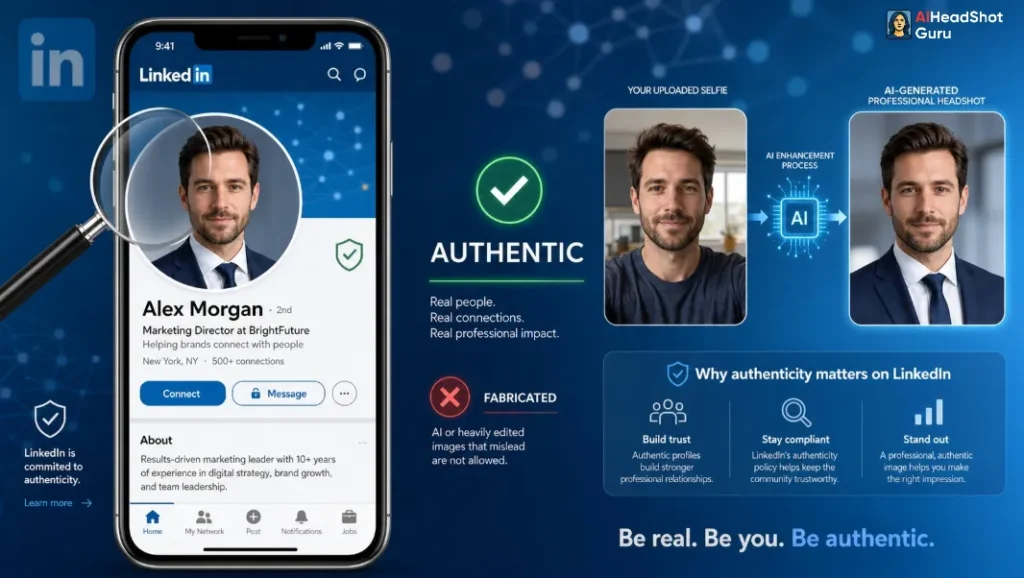
This comes up constantly, and the answer is more nuanced than either camp online makes it sound.
LinkedIn does not explicitly ban AI-generated headshots as of 2026. Their policy focuses on authenticity — your profile photo must accurately represent your real appearance and likeness. A realistic AI headshot generated from actual photos of your face generally meets that standard.
What LinkedIn does require is disclosure for AI-generated product content and promotional visuals. For profile photos specifically, the policy states that images may be removed if they are false, misleading, or fail to accurately represent the person’s actual likeness. An AI headshot that realistically represents how you look is unlikely to violate this.
The practical takeaway: use AI headshots that are generated from real photos of you, not AI-fabricated faces that don’t look like you. That’s the line between acceptable use and a policy violation.
GDPR, CCPA, and AI Headshot Tools: What You Actually Need to Know
| Regulation | Who It Covers | What It Requires From AI Tools |
|---|---|---|
| GDPR (EU) | EU residents and any platform serving them | Explicit consent, purpose limitation, right to erasure |
| CCPA (California) | California residents | Right to know, right to delete, opt-out of data sale |
| EU AI Act | AI systems operating in the EU | High-risk biometric systems face strict usage limits |
| BIPA (Illinois) | Illinois residents | Informed consent before collecting biometric identifiers |
If you’re in the EU, any platform you use for AI headshots must give you the ability to request deletion of your data at any time — not just after their stated window. Platforms explicitly noting GDPR compliance are the only safe choice for European users.
For US users outside California and Illinois, protections are currently patchwork at the federal level, which makes reading the individual platform’s privacy policy even more important.
The “Free Tool” Trap: Why Free AI Headshots Carry Higher Risk
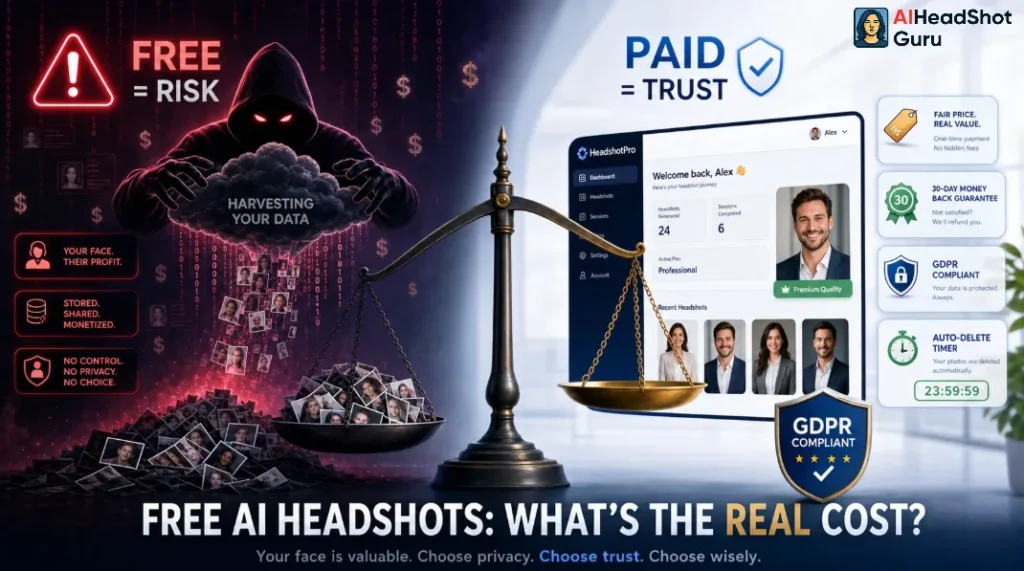
Free AI headshot generators are everywhere. Some are fine. Many are not — and the reason comes down to basic economics.
Building and running a high-quality AI headshot tool is expensive. Compute costs, model training, storage, and development don’t come cheap. When a tool charges nothing and shows no ads, the question is obvious: how are they making money?
The answer is frequently your data. Free tools with no stated business model or revenue stream are far more likely to:
Paid platforms have skin in the game. They have reputations to protect, refund policies to honor, and legal exposure if they mishandle data. That accountability structure is a big part of why paid AI headshot tools are inherently safer than free alternatives.
Your Personal AI Headshot Safety Checklist
Before you upload your photos to any AI headshot platform, run through this list:
If a platform you’re evaluating can’t tick most of these boxes, move on. There are plenty of legitimate, transparent AI headshot tools that can.
Which AI Headshot Tools Are Considered Safe?
The safest AI headshot generators share a consistent set of characteristics: they’re paid platforms, they auto-delete your photos within a defined window, they explicitly state photos are not used for model training, and they carry real user reviews backing up their claims.
InstaHeadshots is one example that checks these boxes — they state automatic deletion after 30 days, offer a 100% money-back guarantee, and have a straightforward no-training policy on uploaded photos. When evaluating any tool, use the checklist above rather than relying on homepage marketing copy alone.
The AI headshot space has matured significantly by 2026. The reputable players have aligned their practices with privacy law expectations. The risky ones are easy to spot once you know what to look for.
AI Headshots Safety & Privacy: FAQs
Are AI headshots safe to use for professional profiles?
Do AI headshot tools store your photos permanently?
Can AI headshot platforms use your photos to train their AI?
Is facial data from AI headshots protected by GDPR?
Are AI headshots allowed on LinkedIn?
Is it safe to upload selfies to an AI headshot generator?
What makes an AI headshot tool GDPR compliant?
What are the biggest privacy risks with AI headshot generators?
The Bottom Line
AI headshots are not inherently unsafe — but the industry is uneven. The gap between a well-run, privacy-conscious paid platform and a sketchy free tool is enormous, and most users don’t check before uploading.
Your face is biometric data with real legal protections in most jurisdictions. Treat it accordingly. Stick to platforms with explicit deletion policies, no-training guarantees, and a real paid business model — and you’ll have studio-quality headshots without handing your facial data to an unknown server somewhere.
The tools that deserve your photos are the ones that are upfront about exactly what they do with them.